
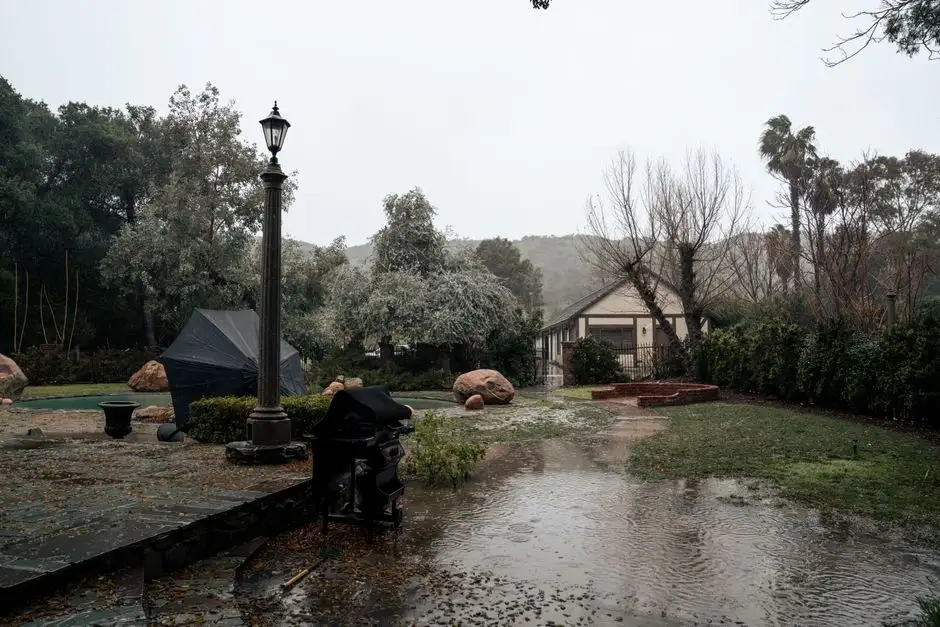
Your yard floods after rain in California when water arrives faster than the soil, grading or drainage system can carry it away. Compacted or clay-heavy soil, a low spot, blocked inlets, roof runoff and runoff from neighboring lots are the most common causes.
The pattern gives you clues: water that spreads across a lawn points to a different problem than a pond beside the house or a strip of runoff crossing a patio. Our team at Northern California Drainage Experts traces the water back to its source, then matches the correction to the site rather than adding a drain at random.
Why does my yard flood after rain in California is a drainage problem that occurs when rainfall and runoff exceed the ground's ability to absorb or route water safely. The sections below explain what to inspect, how California soil and storm patterns affect drainage, and which fixes address recurring pools.
Why does my yard flood after rain in California?
Yard flooding in California usually comes from a combination of slow-draining soil, an unfavorable slope, concentrated runoff or a drainage outlet that cannot keep up. A short, intense storm can expose a weakness that stayed hidden through dry months.
California's long dry spells leave many yards hard and compacted before the rainy season. When a strong autumn or winter storm follows, water runs over the surface instead of soaking in. Clay soils add another constraint: their small particles hold water and drain slowly, especially where construction equipment or foot traffic has packed the ground.
Roof areas matter, too. One inch of rain falling on a 1,000-square-foot roof produces about 623 gallons of water. If a downspout releases that volume beside a foundation or onto a narrow strip of lawn, the same area can flood even when the rest of the property drains normally.
We see Yard Drainage Repair in California problems ranging from one blocked inlet to a whole yard that slopes toward the house. The fix depends on whether water needs to be intercepted, conveyed through a pipe, or given a safe place to disperse.
How to find the cause of backyard flooding in California
You can find the cause of backyard flooding in California by tracking where water starts, where it collects, and whether it has a clear route out. Observe the yard during the storm if it is safe, then inspect it again after the rain stops.
Start at the highest wet area and follow the flow downhill. Look for roof downspouts, paved surfaces, neighboring slopes, retaining walls and low lawn sections that direct water toward the same spot. Note whether the pool appears during light rain or only after a heavy burst.
- Check whether downspout outlets are crushed, disconnected or aimed at the house.
- Clear leaves and sediment from surface grates, catch basins and channel openings.
- Look for soil or mulch piled against siding, vents or the foundation.
- Mark the pool's edge and measure its depth after the rain ends.
Pay attention to the timing. Water that appears immediately beside a downspout suggests concentrated roof runoff; a broad sheet moving across the lawn points toward grading or upstream runoff. If water wells up from a drain or stays above a buried line, the pipe may be blocked or damaged.
Our Yard Drainage Inspection and Diagnosis in California follows these clues and checks how water moves through the whole property. That distinction matters because installing a larger pipe will not solve a low spot if the pipe has nowhere to discharge.
How soil and slope affect yard flooding after rain
Soil and slope determine whether California rain infiltrates the yard or travels across it toward a low point. A flat lawn has little force to move water, while a steep yard can send runoff downhill fast enough to overwhelm a drain or erode planting beds.
Clay and compacted fill often absorb water slowly. Sandy soil usually lets water pass through faster, but it can still flood where the groundwater table is shallow, a hard layer sits below the surface or runoff enters faster than it can drain. A simple field clue is a footprint that stays filled with water after you step away; the surface is saturated or poorly draining.
Grade near a home deserves close attention. The soil should generally fall away from the foundation rather than form a basin against it. Even a small reverse slope can collect water along a wall. A laser level or straight board and level can help reveal a subtle dip, but do not dig near buried utilities just to test a suspected route.
Regional conditions vary. In parts of the Sacramento Valley, winter storms can leave low areas wet for days where compacted soils and flat lots limit drainage. In older San Francisco neighborhoods, narrow side yards, paving and dense construction can funnel roof and surface runoff into confined spaces. Our work in Yard Drainage Repair in Sacramento accounts for the way flat ground and stormwater paths affect a specific property rather than assuming every yard needs the same system.
What to do about standing water in a California yard
Standing water in a California yard needs a safe route away from buildings and neighboring property, plus a fix for the reason it collects. First, keep people and pets out of deep or contaminated water and avoid walking on saturated turf, which compacts it further.
For a shallow pool that drains within a few hours, note the location and watch it through the next storm. If it remains into the next day, repeatedly covers the same area or reaches the foundation, treat it as a recurring drainage issue. Do not pump water onto a neighbor's lot or into a public sidewalk where it creates a hazard.
The right correction depends on the source and outlet. Regrading can redirect surface flow; a channel drain can intercept water along paving; a catch basin can collect runoff at a low point; and a French drain can manage subsurface water where soil and site conditions suit it. Each system needs a suitable discharge point and a grade that keeps water moving.
For recurring California yard drainage repair, we inspect the whole flow path and select a system that fits the property. A drain without a clear outlet simply moves the pool or leaves water trapped in the line.
Costs depend on access, excavation, soil, pipe length and the required outlet. For typical 2026 pricing in this area, a small surface-drain correction can run roughly $1,000-$3,500, while larger grading or buried drainage work can range from $3,000 to $12,000 or more. We explain the proposed work and price upfront before starting.
Common mistakes that make California yard flooding worse
Common drainage mistakes in California include moving water toward a building, adding a drain without an outlet and covering a wet area before identifying its source. These quick fixes often hide the symptom while leaving the water path unchanged.
Adding topsoil to a low spot may level the lawn temporarily, but it can raise soil against siding or send runoff toward a neighbor. Filling a pool also does not increase the yard's ability to drain if compacted soil lies underneath. A dry-looking surface can conceal saturated ground below.
Other mistakes we often find include:
- Connecting downspouts to a small pipe that cannot carry roof runoff during a downpour.
- Covering a drain grate with mulch, gravel or turf.
- Sending water toward a retaining wall without checking how it will escape.
- Installing perforated pipe with no filter fabric or suitable stone where required by the design.
Do not assume that a French drain is the answer to every pool. It is designed to collect and convey subsurface water; it may not handle fast surface flow from a roof or driveway. Matching the system to the source prevents unnecessary digging and repeat repairs.
When to call a professional for a flooded yard
Call a drainage professional in California when water reaches the house, persists beyond 24 hours, returns after each storm or causes erosion and sinking soil. A contractor can trace surface and subsurface flow, check drains and plan a discharge route that does not create a new problem elsewhere.
Professional help is especially useful when multiple sources meet in one low area, water enters a crawlspace, a retaining wall stays wet, or a drain backs up during rain. If you see a sudden sinkhole, exposed utility or water close to electrical equipment, keep clear and address the immediate safety risk first.
At Northern California Drainage Experts, we inspect the yard, identify the source and explain the repair options in plain language. If you are dealing with California lawn drainage problems after storms, we can help you move from repeated cleanup to a system designed around your site's slope, soil and runoff.
Frequently Asked Questions
Why does my yard flood every time it rains in California?
A yard that floods after every storm usually has a persistent cause: compacted or clay soil, a low grade, a blocked drain, or runoff concentrated by a roof or paved area. Track the first place water appears and how long it remains. If the same pool returns, the underlying route or outlet needs correction, not another temporary layer of soil.
How long should standing water remain in a yard after rain?
Shallow puddles should usually begin shrinking within a few hours; standing water that remains beyond 24 hours deserves attention. Clay soil and a major storm can extend that period, but repeated day-long pools can damage turf and point to poor grading, saturation or a blocked outlet. Measure the same spot after successive storms to confirm the pattern.
Can poor grading cause backyard flooding in California?
Yes. A reverse slope or low basin can direct rain toward a home or trap it in the yard. Even a modest change in grade matters across a long side yard. Check the flow during rain, and make sure any correction sends water to a legal, safe outlet rather than toward a foundation or adjoining property.
When should I get professional yard drainage help?
Get professional help if water reaches the foundation, remains for more than 24 hours, returns with each storm, or causes erosion, sinking ground or drain backups. A drainage contractor can distinguish surface runoff from groundwater and check whether an existing pipe is blocked, undersized or missing a functional outlet.
Get help with Yard Drainage Repair in California
If standing water keeps returning, Northern California Drainage Experts can trace the runoff and recommend a repair that fits your yard. Call +1 (310) 388-1903 to discuss your drainage problem.